Loading comparison
BMW i3 (60Ah) vs Peugeot e-208 (2019-2023)
Selected trim60Ah · 2013-17118 mi · 21.6 kWh · £32,350
Selected trim50kWh 136 · 2019-23225 mi · 50 kWh · £28,550
At a glance
In this comparison, BMW i3 leads on running costs and city driving, while the Peugeot e-208 leads on value for money, motorway range and family practicality.
Which should you choose?
Choose the BMW i3 (60Ah) if...
- you want the lowest running costs - from just 1.8p per mile on off-peak electricity
- you drive in the city - it's compact with an excellent turning circle
Choose the Peugeot e-208 (2019-2023) if...
- you want the most for your money - best overall spec per pound
- you do long motorway journeys - it has the best estimated real-world range at speed
- you need the most family-friendly option with good safety and space
- you need the fastest charging of these options
How we reached the recommendation
Verdict
Our take
The Peugeot e-208 leads in the most categories, but each car here has its strengths.
ValuePeugeot
BMW
3.5
Peugeot
5.7
Motorway RangePeugeot
BMW
3.1
Peugeot
3.6
FamilyPeugeot
BMW
4.9
Peugeot
5.8
ChargingPeugeot
BMW
4.1
Peugeot
4.6
Cost Per MileBMW
BMW
9
Peugeot
5
City DrivingBMW
BMW
9.1
Peugeot
8.5
What each car does better
See the specification differences behind the verdict, with supporting figures for each advantage.
Peugeot e-208
50kWh 136 (2019-23)
- £3,800 cheaper
- 107 miles more WLTP range
- 50 kW faster rapid charging
- 1 more seat
Key specifications
Compare the key specifications for your selected trims.
| Measure | BMW i360Ah | Peugeot e-20850kWh 136 (2019-23) |
|---|---|---|
| Price | £32,350 | £28,550 (better) |
| Official range | 118 miles | 225 miles (better) |
| Boot space | 260 L | 309 L (better) |
| 10-80% rapid charge | 24 min | Not available |
| 0-62 mph | 7.2 sec (better) | 8.1 sec |
Size Comparison
View:
Align by:
BMW i3
Peugeot e-208
Length
BMW i34,006mm-49mm
Peugeot e-2084,055mm
Width
BMW i31,775mm
Peugeot e-2081,765mm-10mm
Height
BMW i31,598mm
Peugeot e-2081,430mm-168mm
Space, size & parking
Parking & manoeuvring
Compare exterior dimensions to assess how each car fits UK parking spaces.
| Measure | BMW i360Ah | Peugeot e-20850kWh 136 (2019-23) |
|---|---|---|
| Length | 4,006 mm | 4,055 mm |
| Width (mirrors folded) | 1,775 mm | 1,765 mm (better) |
| Width with mirrors out | 1,999 mm | 1,960 mm (better) |
| Height | 1,598 mm | 1,430 mm |
| Turning circle | 9.9 m (better) | 10.4 m |
| Clearance in a standard bayA standard UK parking bay is 2,400 mm wide. | 625 mm spare | 635 mm spare (better) |
People & luggage
Compare seating, child-seat mounting points, boot space and towing capacity.
| Measure | BMW i360Ah | Peugeot e-20850kWh 136 (2019-23) |
|---|---|---|
| Seats | 4 | 5 (better) |
| ISOFIX child-seat points | 2 | Not available |
| Boot space (seats up) | 260 L | 309 L (better) |
| Boot space (seats down) | 1100 L | 1119 L (better) |
| Towing capacity (braked) | Not available | 0 kg |
Full specifications
| Specification |  BMW i3 60Ah |  Peugeot e-208 50kWh 136 (2019-23) |
|---|---|---|
| Dimensions | ||
| Length | 4.01m | 4.05m+49mm |
| Width | 1.77m | 1.76m-10mm |
| Width (mirrors) | 2.00m | 1.96m-39mm |
| Height | 1.60m | 1.43m-168mm |
| Wheelbase | 2.57m | 2.54m-30mm |
| Ground Clearance | 160mm | Not available |
| Capacity | ||
| Boot (seats up) | 260L | 309L (better) |
| Boot (seats down) | 1100L | 1119L (better) |
| Seats | 4 | 5 (better) |
| Practicality | ||
| Turning Circle | 9.9m (better) | 10.4m |
| Kerb Weight | 1,270kg (better) | 1,455kg |
| Electric | ||
| Battery | 21.6kWh | 50kWh (better) |
| Range (WLTP) | 118 mi | 225 mi (better) |
| Max DC Charge | 50kW | 100kW (better) |
| Pricing | ||
| UK MSRP | £32,350 | £28,550 (better) |
| Details | ||
| Body Style | Hatchback | Hatchback |
| Available | 2013–2017 | 2019–2023 |
* BMW i3: NEDC figure — WLTP testing was not available for this model year
Range & charging
Range, charging & battery
Check official and estimated driving range alongside charging speeds, efficiency and battery technology.
| Measure | BMW i360Ah | Peugeot e-20850kWh 136 (2019-23) |
|---|---|---|
| Official range (WLTP) | 118 miles | 225 miles (better) |
| Estimated motorway rangeEVcarsguide estimate at sustained motorway speed. | 75 miles | 155 miles (better) |
| 10-80% rapid charge time | 24 min | Not available |
| Max rapid charge rate | 50 kW | 100 kW (better) |
| Home AC charging | 7.4 kW | 7.4 kW |
| Energy consumption | 129 Wh/km (better) | 154 Wh/km |
| Usable battery capacity | 18.8 kWh | 46 kWh (better) |
| Battery chemistry | NMC | NMC |
| Battery architecture | 400V | Not available |
| Heat pump | Not standard | Not available |
Driving & everyday use
Performance & drivetrain
Compare acceleration, power and drivetrain specifications for the selected trims.
| Measure | BMW i360Ah | Peugeot e-20850kWh 136 (2019-23) |
|---|---|---|
| 0-62 mph | 7.2 sec (better) | 8.1 sec |
| Power | 125 kW (better) | 100 kW |
| Torque | 250 Nm | 260 Nm (better) |
| Drivetrain | RWD | FWD |
Watch the reviews
Watch selected video reviews here, or visit each model page for the full collection.

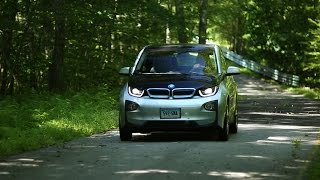
Reviews and videos discuss each model overall; the specifications above apply to your selected trims.
Prices & deals
New and used prices
Current pricing and recent used-market behaviour.
| Measure | BMW i360Ah | Peugeot e-20850kWh 136 (2019-23) |
|---|---|---|
| Used market price from | £5,300 | £9,131 |
| Average used price | £7,200 | £10,518 |
Used prices are indicative figures gathered from independent UK dealer listings and change frequently.
Calculate your real costs
For a useful running-cost comparison, factor in your mileage, charging access and current petrol or diesel car alongside the EV estimate.
Compare with petrol or diesel
Compare purchase price, energy, road tax and maintenance with a petrol or diesel alternative.
Calculate company-car tax
Work out monthly Benefit-in-Kind using current and future HMRC rates.
Cost per mile
Compare EV charging costs per mile with petrol and diesel using your charging options.
Check a lease quote
Assess the effective monthly cost alongside the list price and expected depreciation.
Safety & ownership confidence
Euro NCAP - BMW i3 60Ah
Tested 2013
Adult Occupant86%
Child Occupant82%
Vulnerable Road Users57%
Safety Assist55%
Full result on euroncap.com (opens in new tab)
Euro NCAP - Peugeot e-208 50kWh 136 (2019-23)
Tested 2019
Adult Occupant91%
Child Occupant86%
Vulnerable Road Users56%
Safety Assist71%
Full result on euroncap.com (opens in new tab)
Warranty
Check the published battery warranty cover for each selected trim.
| Measure | BMW i360Ah | Peugeot e-20850kWh 136 (2019-23) |
|---|---|---|
| Battery warranty | 8 years | 8 years |
| Battery warranty distance | 160,934 km | 160,934 km |
What owners say
Aggregated from UK owner forums and communities - the things you only learn after living with the car.
Shared watch-outs for both cars
Owners of every car here flag real-world range. Worth checking on a test drive whichever you choose.
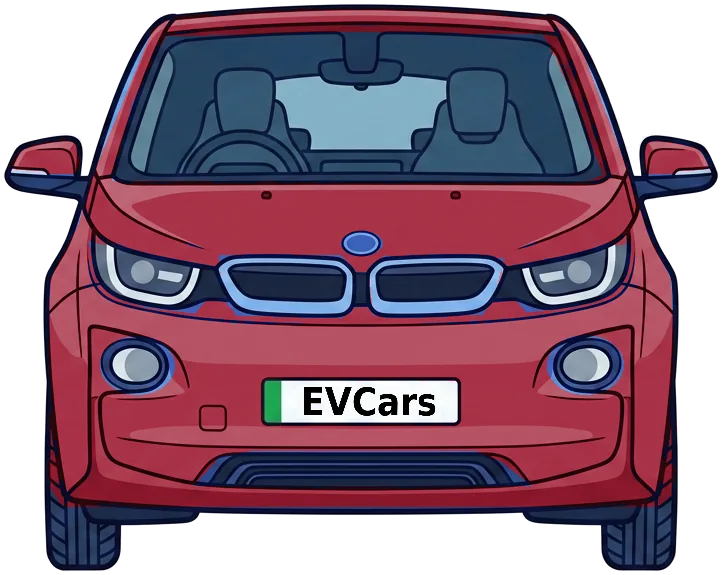
BMW i3
60Ah
Owners love
- Excellent urban driving dynamics with agile handling, quick acceleration, and responsive electric powertrain making it fun and engaging
- Premium interior design and build quality with lightweight carbon fiber construction; won Automotive Interiors Expo Award 2014
- REX range extender provides practical flexibility for occasional longer journeys without replacing daily charging needs
Watch out for
- Real-world range significantly lower than advertised (60-85 miles vs. 118 miles claimed for 60Ah models), with severe winter degradation to 55-60 miles
- Early 60Ah battery models experience capacity degradation over time, limiting long-term viability as sole car
- AC-only charging on early models without DC rapid capability complicates longer journeys and affects resale value
Owner tips
- For 60Ah models, verify battery health via hidden menu diagnostics and only buy as second car or accept potential replacement within two years; consider 120Ah upgrade if available
- Pre-condition cabin before driving and charge to 75-80% maximum to preserve battery health; use Eco Pro Plus mode to maximize range in winter
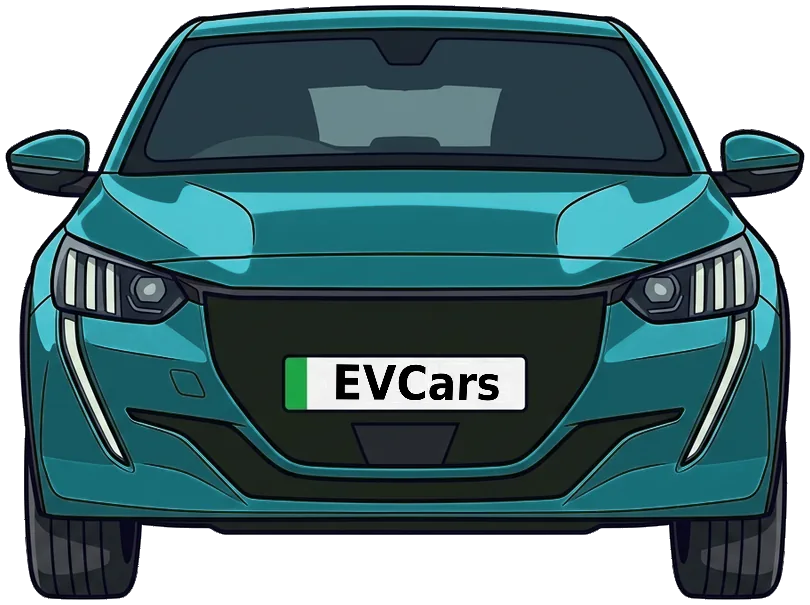
Peugeot e-208
50kWh 136 (2019-23)
Owners love
- Owners like the drive: quiet, quick enough in Eco mode, sure-footed and easy to park.
- The interior feels premium for a small car, and owners like the small steering wheel and 3D i-Cockpit display.
- Rapid charging holds close to the 100 kW peak, and owners say 2021-on cars sustain high speeds for longer.
Watch out for
- Real-world range falls well short of WLTP, typically about 150 miles in warm weather and 120-130 in winter, less on the motorway.
- The range estimate is unreliable and early cars show no battery percentage on the dash.
- Several owners report on-board charger failures, often around 10,000-12,000 miles, causing intermittent home charging, with weeks-long waits for repair and dealers slow to diagnose it.
Owner tips
- Use Eco and B (brake) modes in winter and judge range by miles per kWh, not the estimate.
- If AC charging keeps stopping, ask the dealer to check the on-board charger before blaming the home charger.
Buying options
Get a quote
BMW i3
Used on AutoTraderLease deals
Peugeot e-208
Used on AutoTraderLease deals
Live used listings
Active inventory from independent UK dealers.
BMW i3
No active listings.
Peugeot e-208
- £12,9902020Anchor CarsView
- £14,2402022Anchor CarsView
- £12,4952021Drive GreenView
Frequently asked questions
Is the BMW i3 worth the extra £3,800 over the Peugeot e-208?
The BMW i3 costs £3,800 more than the Peugeot e-208. For that premium it adds a 0.9s quicker 0-62mph time and lower energy use, 129 versus 154 Wh/km. The Peugeot e-208 is not just cheaper - it also offers 107 miles more WLTP range, 50 kW faster peak rapid charging and 1 more seat (5 versus 4). On EVcarsguide's combined category scores, the Peugeot e-208 comes out ahead overall.
Which is cheaper to own over 5 years, the BMW i3 or the Peugeot e-208?
The Peugeot e-208 is £3,800 cheaper to buy. Running costs are almost identical - about £144 a year either way, at 8,000 miles on an off-peak home tariff. Add 5 years of charging and the Peugeot e-208 comes out roughly £3,680 cheaper overall. These figures cover list price and home charging only - insurance, servicing, tyres and depreciation will move the real total.
What are the BMW i3 and Peugeot e-208 like on a long motorway trip?
EVcarsguide estimates a real-world motorway range of about 75 miles for the BMW i3 and 155 miles for the Peugeot e-208 - both below their WLTP figures, because sustained high speed is the hardest case for an EV. The Peugeot e-208 goes roughly 80 miles further between charging stops.
Which is easier to park and drive in town, the BMW i3 or the Peugeot e-208?
The two are within 10 mm on width, so neither is meaningfully easier to thread into a tight space. In a standard 2,400 mm bay that leaves about 635 mm of total clearance for the Peugeot e-208 and about 625 mm of total clearance for the BMW i3. The BMW i3 also turns in a 0.5 m tighter circle, which helps with U-turns and multi-storey ramps.
Which battery will hold up better as a used buy, the BMW i3 or the Peugeot e-208?
Over a 8-year ownership window EVcarsguide's degradation model projects roughly 87% battery health for the BMW i3 and 84% for the Peugeot e-208. That gives the BMW i3 a modest edge in retained real-world range. Both use NMC-type cells, so for daily use keep the charge limit near 80% to slow degradation. Both batteries carry a 8-year manufacturer warranty.
Go deeper on each car
Visit the full model pages for owner feedback, expert reviews, used prices and battery-health information.
Compare against other rivals
Compare similarly sized and priced electric cars before finalising your shortlist.
More BMW i3 comparisons
More Peugeot e-208 comparisons
See both cars in our rankings
EVcarsguide scores every verified EV on price, range, family use and running costs. Here is where this pair appears.
Where the BMW i3 and Peugeot e-208 rank among EVs under £40,000Where the BMW i3 and Peugeot e-208 rank among the best small electric carsWhere the BMW i3 and Peugeot e-208 rank among the best motorway EVsWhere the BMW i3 and Peugeot e-208 rank among the best city EVsWhere the BMW i3 and Peugeot e-208 rank among the cheapest EVs to runWhere the BMW i3 and Peugeot e-208 rank among EVs with the biggest boots
If neither is quite right
Explore other verified electric cars that may better suit the priorities this pair does not meet.
Further reading
Explore buying and ownership guides to help you choose between these electric cars.
 Guide
Buying a Used BMW i3 (2013-2022): 60Ah vs 94Ah vs 120Ah, REx, Warranty & What to Check
A used BMW i3 buyer’s guide: the three battery sizes, i3 vs i3s, the range extender explained, battery warranty left, the motor electronics fault to ask about, real-world range, what to pay and a printable checklist.
 Guide
Buying a Used Peugeot e-208 (2019 on): Which Version, Loss-of-Power Recalls & What to Pay
A used Peugeot e-208 buyer’s guide: the 2019-2023 car vs the 2024 facelift, 50 vs 51 kWh, 7 or 11 kW charging, the loss-of-power recalls, battery warranty left, real-world range, what owners report, what to pay and a printable checklist.
Data accuracy
Specs are sourced from manufacturer websites and manually reviewed. These figures were last verified .